A Hidden Passion.
08/07/2026
Writing has always been one of my hidden passions. Many a time have I written out a dream or fun story idea only for it to peter out and be taken over by something more pressing at the time. However, some of my writing assignments are more memorable than others. I remember for an English class I had to write a narrative on my own death. As a person who feels deeply, I found a passion in this project. I wrote a tale of a simple run in the woods becoming dangerous when I found myself between a small bear cub and its mother. I remember trembling as I read it aloud to my class. Partly out of fear about what they thought of the writing and partly because of feelings it brought up within myself as I faced a fear and brought it to light in a way I hadn't done before. The cathartic feeling it released in me was something I knew I would remember in the days to come, and I still use this technique today when I am grappling with a difficult subject.

Adventure Time!
08/06/2026
Cartoons have defined our childhoods since the dawn of television. It is fascinating how the shifts in culture over time reflect in the media we consume. From Mickey Mouse of yore to the modern Powerpuff Girl. There are many cartoons in my head that rock me with nostalgia, knowing that kids will never experience them in the way that I did. One of my favorites was called Adventure Time. A 2010s hit show about a boy and his talking dog living in a post-apocalyptic world full of magic and mystery, lost to time. I loved how abstract the animation was and how relatable it was to be a young, orphaned teenage boy with a sense of humor. I will still watch this show now in my 30s because of the deep themes it offers and the troubling times it has gotten me through when the world was bleak. It uplifted my imagination and perspective of the differences in others and how creative one has to be when helping them. Over the years, Adventure Time's fame has faded, but it still maintains a large cult following, and I'm glad I got to be a part of seeing its birth.

Interviewing For The First Time.
08/05/2026
What impact has interviewing had on you?
Interviewing has totally shifted how I approach storytelling and research. When working on pieces like the recent news article covering algorithm fatigue, I realized that data and statistics will only go so far. While it does provide the necessary context, it doesn't add the human element. Speaking to sources helps me better understand what I'm writing about and gives me flexibility to adapt to the narrative on the fly. I have learned that asking the right questions can uncover entirely new stories and ideas that may have otherwise been overlooked. Because of this, I am a more empathetic listener and a more well-rounded writer.

Newsworthy Vs Sensational.
08/04/2026
In your opinion, what makes something newsworthy versus only sensational?
Newsworthy content serves to contextualize, empower, and inform. It provides the public with information they need to understand their community, make informed choices, or hold power accountable. This allows people to understand the broader impact of what is happening in the world around them. Sensational content, on the other hand, only serves to provoke a reaction like outrage or fear. It seeks to gain clicks or engagement over nuance and clarity. Its service to self is to the detriment of the greater good and education of the society we live in. We should be wary of the traction gained by sensationalized news and understand that these are the birthplaces of radicalization that we are grappling with in today's world.

Empathy In Writing.
08/03/2026
Quote by Joseph Smith: “When persons manifest the least kindness and love to me, O what pow’r it has over my mind. . . . The nearer we get to our heavenly Father, the more are we dispos’d to look with compassion on perishing souls—[we feel that we want] to take them upon our shoulders and cast their sins behind our back . . . if you would have God have mercy on you, have mercy on one another.
This quote connects deeply to the ethical core of news writing by reminding us that behind every headline or controversy is a real human being.
Journalism requires commitment to objective fact. The quote suggests that this shouldn't come at the expense of empathy. When reporters cover tragedy or personal failure, the “perishing souls,” it is best to frame their stories with compassion. This prevents news from devolving into clickbait and sensationalism. Furthermore, extending kindness during the interview process builds a foundation of trust, which allows subjects to share a more authentic version of themselves. Applying mercy to news writing means reporting the truth with dignity, recognizing that the subjects of our stories are flawed and deserving of grace.
The Art Of Always Wanting.
07/31/2026
Are we ever satisfied with what we have now? When I'm unemployed, I wish that I had a job. However, when I have a job, I look out my window to a homeless person and feel a sense of jealousy over their perceived freedom. I find that I am always looking for the next thing, and I wonder if social media has rewired our brains to constantly seek out something new rather than basking in the present and enjoying the moment for what it is. Perhaps we have been wired this way from the beginning, and it is the main reason that we humans have made it so far in the first place. There is one thing for sure: I will not be satisfied with this blog post, and I'll be sure to write another one.
Family Group Chat Dynamic.
07/30/2026
Every family has a group chat (if you're not part of one, my condolences), and I've noticed that each one is wildly different from any other one. For example, my spouse's family chat is very organized with daily updates about the grandchildren. Group planning and who is going to buy what gift and for whom? Whereas mine is filled with random videos of “here's what we're doing today” with little to no context and a few thumbs up. Rarely does any real discourse happen here. Perhaps there is a little organizing, but it's always messy and last-minute. I find family group chats a microcosm of individual personality types. My spouse being organized and chatty is a perfect reflection of this. Analyze your own family group chat and see if you can pick out your own personality.

Write And Write Some More.
07/29/2026
Frequent blog writing has had many benefits for me so far. It is true what they say about practice making perfect. The more I write, the easier it becomes. However, I do feel a bit worried about writing for the sake of it rather than writing something meaningful when it comes to mind. It is a lot like saying prayers. If one does it enough, the prayer becomes repetitive and loses its meaning to the person saying it. I want to make sure every time I write, there is intention behind the paragraph and its words, and I hope people reading my content in the future (when it's not for school) will be able to recognize that.
Feature Writing Any Good?
07/28/2026
Unlike hard news, which features an inverted pyramid structure, feature writing allows for more experimentation with narratives and stylistic flair. Features often focus on human interest instead of delivering the who, what, where, and when, and feature writing allows the writer to build empathy, connect with the reader, and explore the nuances of the background and deeper introspection on the how and why of the story. Breaking news stories often lose relevance in a matter of days, whereas readers reading a feature will find a more timeless value.

Editing And The Gospel.
07/27/2026
In editing, the first step is often making rough cuts. We do this by trimming away dead space, distractions, or bad takes. This keeps the story focused. In a gospel sense, this mirrors the process of repentance; just as president hinkly invited us to “put behind the weaknesses of the past,” the Atonement of Jesus Christ allows us to cut our mistakes from our spiritual timeline. By removing the habits or grudges that drag us down, our lives become focused on what actually matters

Plain Plane?
07/24/2026
My sister visited an old bomber plane that had crashed in world war 2. It had some sort of engine failure upon takeoff and crashed among the mountains and trees of British Columbia, Canada. Once they made it to the location, they found the plane was smothered in vibrant graffiti of all types, from highly detailed to downright trashy. I found it beautiful, while she found it abhorrent. At what point does graffiti become an art piece? Would this plane be better off if someone came and painted it over, or should we allow the expression of art to take place? I find I prefer the expression no matter the form. I love looking over walls for interesting graffiti, including crude graffiti. I imagine the person making it and what their intention was. I wonder what in their life led them to paint such a masterpiece, just like those in art galleries, mulling over some plain paper in a building rather than a plane in the mountains. Which has the deeper meaning? Like in all things, it is in the eye of the beholder.
Where Is The Internet Now?
07/23/2026
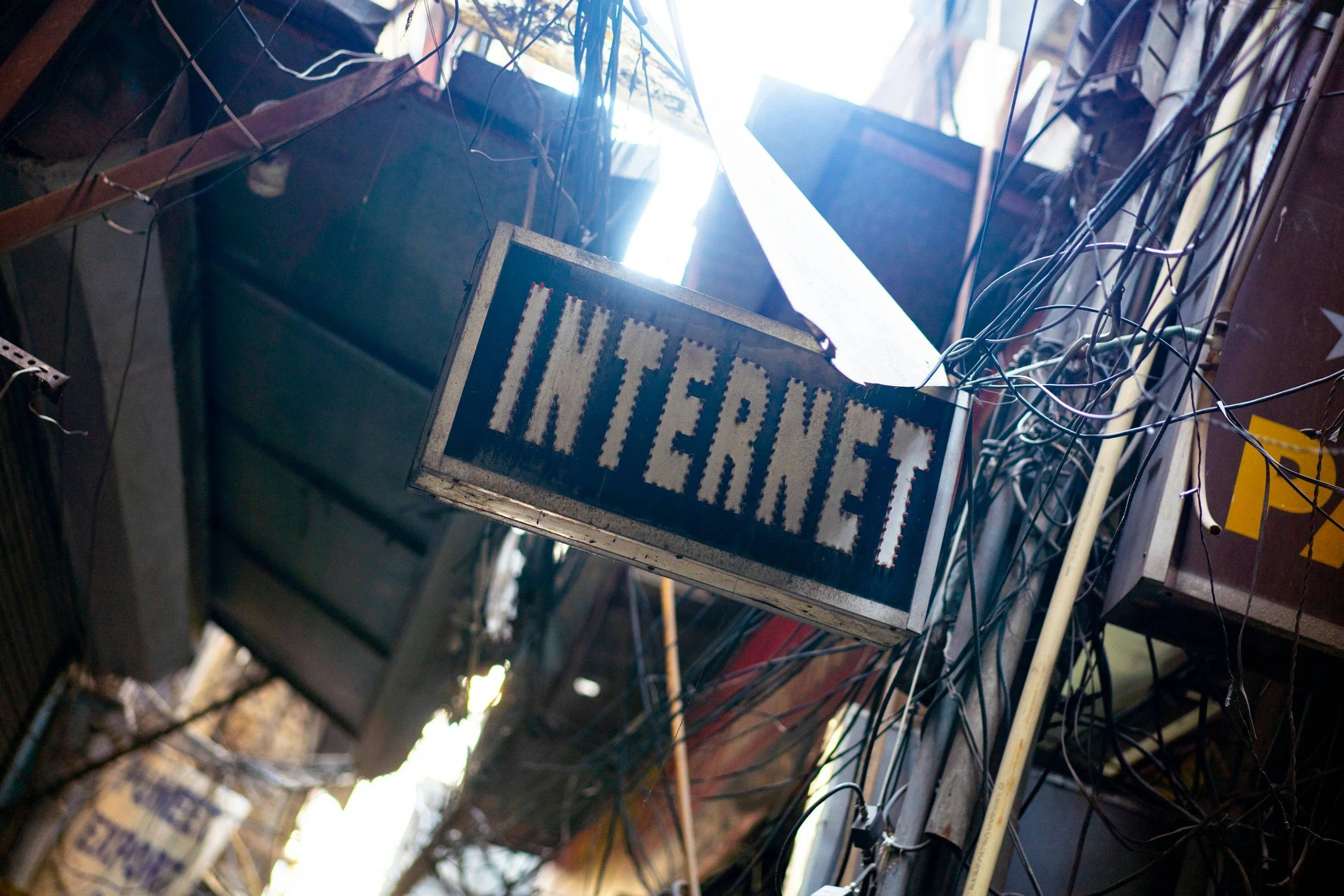
With the rise of AI and generated content. Could we be fulfilling the “dead internet” prophecy? Meta has already released AI Instagram profiles, and Reddit has similarly gotten rid of key features like profile creation date to see if an account is a bot or not. One begins to wonder if these mega tech companies are slowly phasing out the users that built their platform in the first place to allow other businesses to push narratives and sway public opinion under the guise of some everyday shmo spouting their opinion. Creating bandwagons and fake public opinions. At what point will the public begin to opt out of this deception and come back to reality? Or even more frightening to think about, what new reality will take its place? Gen Z is already exploring this idea by trying to return to the nostalgia of the 80s, but we all know the era has already come and gone. What do you think will take the internet's place? Is it even possible?
Old Social Posts. Who Cares?
07/22/2026
If I could go back and change my approach to my past social media posts, I would put more effort into how my posts could be perceived by others. I realize that once the post is on the internet, there isn't really any taking that back. Even when something is considered culturally appropriate or accepted by society, will that change in 10 years? We see this occur all the time with high-profile individuals. They post something that at the time is funny, but over time the post begins to age poorly as culture shifts into another place. These people are often” canceled” for these posts later on, and they have to apologize. I want to avoid this as much as possible, even though I'm not so sure it is fully avoidable because no one person can know the future.

The Social Platform I Love
07/21/2026
When considering the sheer reach and versatility of the platform, Instagram still comes to mind as one of the most powerful platforms available today. It has allowed my own small business to reach clients that previously wouldn't have been possible other than pure word of mouth. Thanks to the tuned algorithm and ability to add a personal touch to posts and messages, it truly is a useful tool for growth at all scales of business.
The “marvelous” social media.
07/20/2026
When Doctrine and Covenants 4 speaks of a “marvelous work,” I instantly think of the insane global reach we have via digital platforms. While I spend a lot of time analyzing social media funnels and algorithms and dissecting the structures, I've seen how these exact tools can be powerful tools for good when used to share messages of hope and foster community. Social media becomes a marvelous work when it shifts from mindless consumption to genuine connection. Moving forward, I want to use my background in video editing to amplify uplifting voices. Instead of just optimizing for clicks, my goal is to design visually compelling and purposeful content that serves the greater good by bringing encouragement into people's feeds.

Video games bigger than football?
07/17/2026
The debate over whether video games should be considered a national sport often misses the incredible level of dedication required to compete at the highest tiers of the industry. Just like traditional athletes, professional esports players endure rigorous daily training regimens, study complex strategies from competitors, and rely on split-second teamwork and communication to succeed. Furthermore, the scale of the global audience that tunes in for major gaming tournaments already rivals, and sometimes eclipses, the viewership of our traditional national pastimes. By recognizing competitive gaming as a national sport, we would not only validate the intense mental agility of these competitors but also acknowledge the massive cultural and economic impact of the esports industry.
FOMO.
07/16/2026
Choosing to unplug from our phones can sometimes feel liberating for a moment. However, that feeling is almost immediately followed by a feeling of unsettling anxiety known as FOMO, or the fear of missing out. After a few hours, our minds begin to race with thoughts of unread messages, breaking news, and moments we are missing just out of reach. Pushing past this anxiety reveals that the world can actually wait. That nothing that important actually happens when we are away, and that taking the time to unplug teaches us that the only thing we are actually missing out on is the constantly connected present on the screens in front of us.

Why write a script?
07/15/2026
A storyboard or script is the blueprint for any successful video project, mapping out every visual and spoken detail before the cameras ever start rolling. Without it, producing a video is like trying to build a commercial property without a floor plan. It will ultimately cost much more in the long run, and the buyer will likely receive a final product that doesn't match the original vision. Presenting a script or storyboard first gives us a tangible way to align on the core message, pacing, and visual style before we spend money on actual production. Investing time in the pre-production phase is the best way to protect your budget, streamline the editing process, and ensure the final video effectively achieves your business goals.
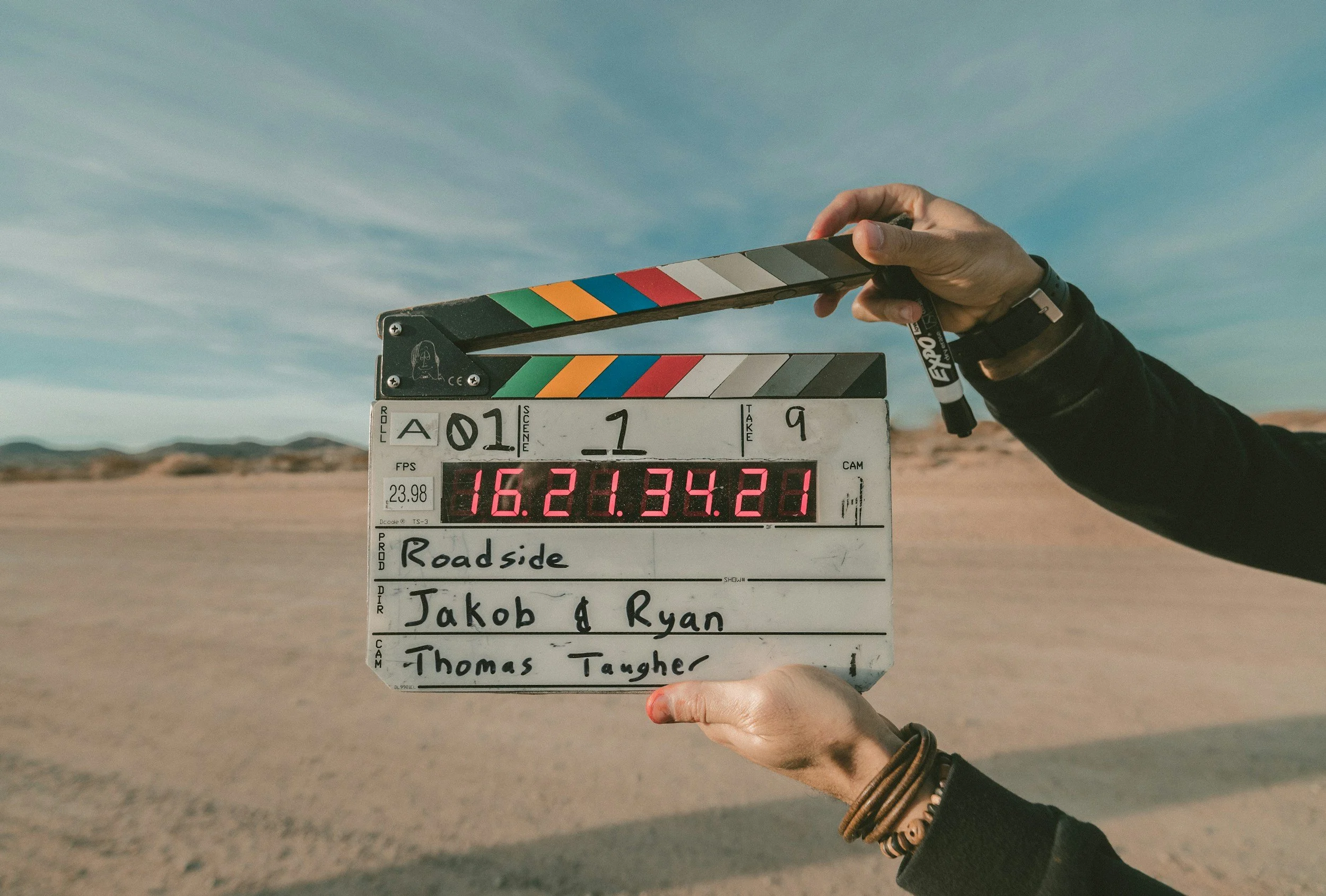
Writing a script.
07/14/2026
For my class this week, I had to write a video script. It was eye-opening. It taught me just how complex production can be. I quickly realized that planning a script is much easier than putting it into action, especially when I don't have a team at my disposal. From a strategic viewpoint, I learned that there are about 7 seconds to make a lasting impact on viewers before they move on to the next video. I also found it takes me quite a few tries of practicing my lines before I get them just right. This proves that the more one perfects the script beforehand, the easier the final editing process will be afterward. Tackling these hurdles has given me a new respect for solo creators who can write, film, and produce content all on their own.

The virtuous and good report
07/13/2026
Article of Faith 13 teaches that "if there is anything virtuous, lovely, or of good report or praiseworthy, we seek after these things," which provides a perfect filter for navigating the modern digital landscape. When deciding what to consume, this principle encourages us to step away from mindless noise and seek materials that elevate our minds and character. For me, that means reflecting on the timeless ideas found in the writings of Marcus Aurelius or consuming media that inspires hope. On the creation side, especially when crafting messages, campaigns, or designs for an audience, it serves as a powerful ethical baseline. It reminds us that we have a responsibility to put content into the world that is honest, true, and genuinely beneficial to the end user, rather than simply contributing to the clutter.